The Last Death of the Year
New Year’s resolutions can be murder to keep. Whether the goal is to work out, save money, eat more healthily, get organized, or reduce screen time, national polls show that by now, about 40 percent of Americans have already failed to keep their New Year’s resolutions. By year’s end, only 9 percent will have kept the promise they made to themselves.
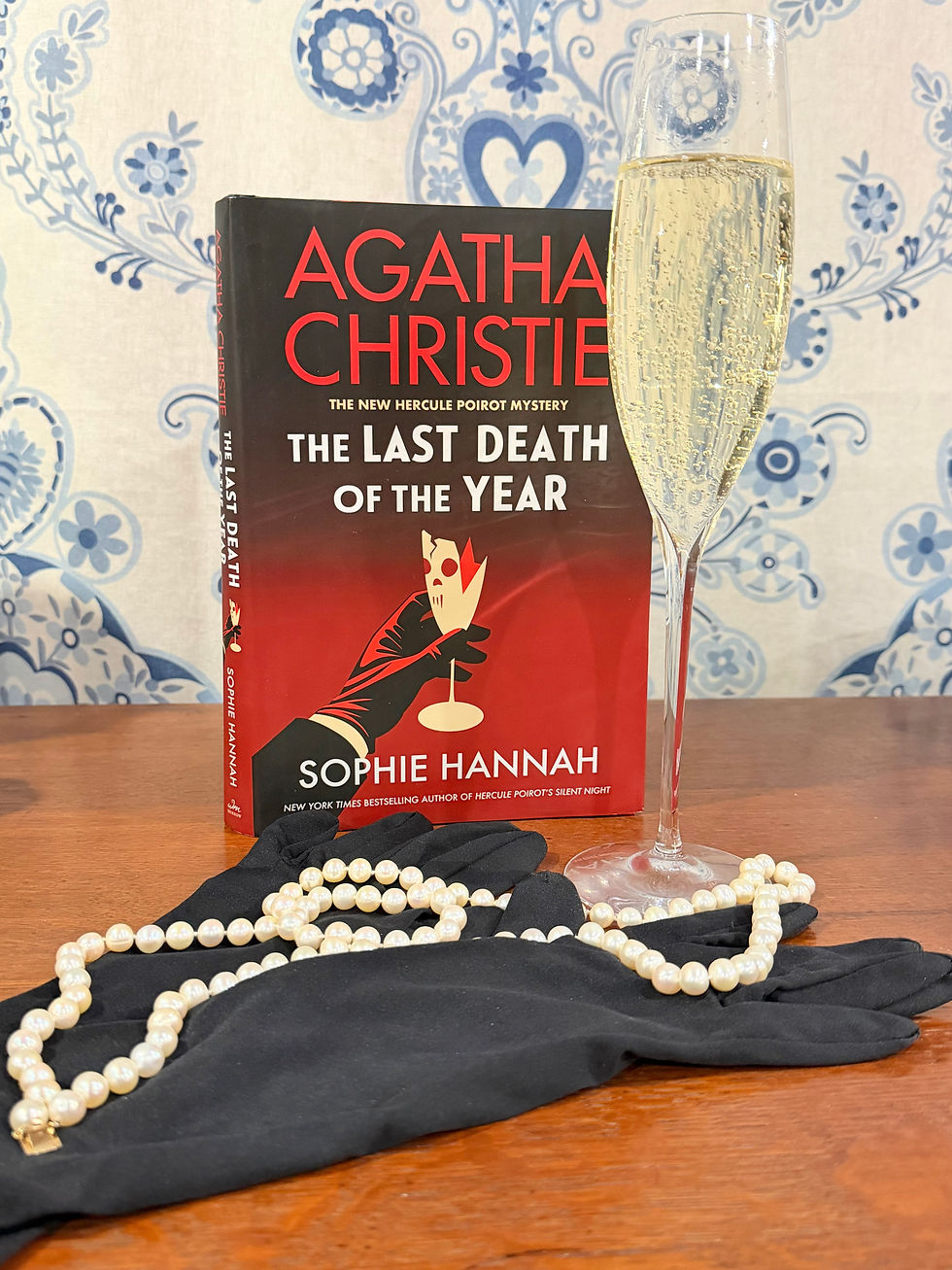
In Sophie Hannah’s sixth installment in the Hercule Poirot series for Agatha Christie, one resident of a diverse group living in an old mansion on the remote Greek island of Lamperos is determined to be among that successful 9 percent. The story unfolds on New Year’s Eve in 1932, as Poirot and Inspector Edward Catchpool arrive on Lamperos to join the holiday celebrations. While Catchpool looks forward to swimming in the sea, Poirot has a hidden agenda: he has been discreetly summoned by the head of the household to investigate an attempted murder involving one of the residents.
What starts as a playful game to welcome the new year—each resident anonymously writes their resolution for others to guess—quickly turns dark. Among the resolutions is a chilling goal: to commit “the last and first death of the year.”
Hours later, one guest has completed their resolution, and another lies dead on the patio.
Poirot is compelled to reveal his true reason for inviting Catchpool to the island. Amid the grim events unfolding, Poirot and Catchpool must act swiftly to ensure the first death remains the only one. The story showcases Sophie Hannah’s adept handling of Agatha Christie’s iconic detective. She masterfully maintains the spirit of Christie’s creation, weaving a tale filled with intriguing suspects, deception, and red herrings.
Comments